Introduction
The year 2025 feels like a turning point in human history. Technology has always shaped our lives, but in this year, one invention stands out more than anything else: Artificial Intelligence (AI). The Rise of AI in 2025 is not just a trend—it is redefining how we work, communicate, and live.
A few years ago, many people thought AI was only about robots from science fiction movies. But today, it has become part of our daily life. From mobile phones to hospitals, from classrooms to farms, from businesses to banks, AI in 2025 is present everywhere. It is working quietly behind the scenes, helping humans in ways we never imagined before.
This article will take you on a journey to understand how AI is rising in 2025, how it is changing our world, what benefits it brings, what problems it creates, and what the future may look like.
What is AI in 2025?
Artificial Intelligence, or AI, simply means teaching machines to think, learn, and make decisions like humans. Instead of just following fixed instructions, AI can now solve problems, analyze data, and improve itself with experience.
For example, when your phone suggests a reply to a message, or when YouTube recommends videos based on what you like, AI is working in the background. In 2025, these systems have become much smarter than before. They can understand voices, recognize faces, translate languages, and even create content like music, images, and stories.
AI is no longer a dream of the future. It is already here, shaping the way we live and work.
Why AI is Rising So Fast in 2025
The growth of AI in 2025 is not an accident. There are many reasons behind its sudden rise.
One big reason is the huge amount of data people create every day. Every search on Google, every post on Instagram, every online purchase—everything adds up to an ocean of data. AI learns from this data, just like a student learns from books.
Another reason is faster technology. With 5G internet, cloud computing, and powerful processors, AI systems can now work in seconds. Earlier, the same tasks used to take hours or even days.
Governments and big companies are also investing billions of dollars in AI research. Tech giants like Google, Microsoft, Tesla, and OpenAI are building powerful AI models that can solve complex problems. Even small businesses and startups are using AI tools to grow faster.
And finally, people themselves are open to using AI. From chatbots on websites to voice assistants in homes, everyone is getting used to having AI as part of their life.
A Brief History: How We Reached AI in 2025
To understand the rise of AI in 2025, we must look back at where it all started. In the 1950s, scientists first began dreaming of machines that could think like humans. At that time, computers were huge and slow. People could not imagine that one day these machines would fit inside a pocket and speak to us like friends.
In the 1980s and 1990s, AI research slowed down because computers were not powerful enough. But things changed quickly after the internet spread across the world. Suddenly, data became available in huge amounts. Faster chips, better algorithms, and smarter software gave AI the fuel it needed.
By the 2010s, we saw the first steps of real AI in daily life—Siri on the iPhone, Google Translate, and recommendation systems on Netflix and Amazon. Then came the 2020s, when AI became more creative. It could write poems, draw pictures, compose songs, and even have conversations.
Now, in 2025, AI has reached a level where it feels less like a tool and more like a companion. The long journey of 70 years has finally made AI a central part of human society.
How AI is Different from Traditional Technology
Before AI, technology was based on strict instructions. Computers did only what humans told them to do. For example, a calculator could add numbers but could not learn from mistakes.
AI is different. It learns from data and improves over time. If you type wrongly in a search bar, AI still understands what you mean. If you listen to a song, AI suggests similar music next time. Traditional technology was like a servant that followed orders, while AI in 2025 feels more like a partner that understands, learns, and grows with us.
AI and Creativity in 2025
One of the most surprising parts of AI’s rise is its ability to create. In the past, we thought machines could only handle logical tasks like solving math or checking records. But now, AI writes stories, composes music, paints pictures, and even makes films.
Artists are using AI tools to create new forms of digital art. Musicians are mixing AI-generated beats with human creativity. Writers are using AI to brainstorm ideas and polish their stories. In 2025, AI is not replacing creativity but expanding it. It is like a new paintbrush for the human imagination.
However, this also raises questions. Who owns art created by AI? Is it the programmer, the machine, or the artist who guided it? These debates are part of the bigger discussion on the ethics of AI.
Ethics of AI in 2025
With great power comes great responsibility. AI in 2025 is powerful, but it also carries risks if not used fairly.
One major issue is bias. Since AI learns from human data, it sometimes copies human mistakes. For example, if an AI system is trained on unfair data, it might give unfair results. This can be dangerous in areas like hiring, law, or healthcare.
Another issue is privacy. AI uses personal data—our messages, shopping history, and even our faces. If this data is misused, it can harm people.
That’s why governments and companies are now making rules for ethical AI. The goal is to ensure that machines respect human rights, stay transparent, and always serve society rather than control it.
AI in India and Developing Countries
While AI is rising everywhere, AI in 2025 looks especially interesting in countries like India. Here, AI is not just a luxury but a necessity.
In rural India, farmers are using AI-powered apps to know when to sow seeds, what fertilizer to use, and how to save crops from pests. Students in small towns are attending AI-supported online classes, which were not possible a decade ago. Local shops are using AI-based payment systems and chatbots to serve customers better.
Developing countries are proving that AI is not only for rich nations. With affordable smartphones and internet access, AI is reaching villages and towns, changing lives at the grassroots level.

The Role of AI in Daily Life in 2025
The most surprising thing about AI in 2025 is how deeply it has entered into ordinary life.
AI in Healthcare
Hospitals are using AI to detect diseases like cancer, diabetes, and heart problems at very early stages. AI-powered robots assist doctors during surgeries, making operations safer and more precise. In rural areas, AI apps help villagers connect with doctors online, saving both time and money.
AI in Education
Classrooms look very different in 2025. Students learn from smart apps that adjust lessons according to their speed. A child who is weak in math gets more practice, while a fast learner gets advanced problems. Teachers use AI to check homework, prepare tests, and even suggest new ways of teaching.
AI in Business
Businesses, big or small, are using AI every day. Customer service is now often handled by AI chatbots that answer questions instantly. Online shops use AI to recommend products that customers are most likely to buy. Even small shops in towns use AI-based tools to manage sales and track stock.
AI in Farming
Farmers are using drones and sensors powered by AI to monitor crops and soil quality. These tools predict weather, suggest the best seeds, and help farmers grow more food with less effort. This is changing agriculture in villages across the world.
AI in Transportation
Self-driving cars, once a dream, are now being tested in many cities. AI is also being used to control traffic lights and manage traffic jams. Delivery companies are using AI to plan the fastest routes so that goods reach customers quickly.
AI in Banking
Banks are safer in 2025 because AI detects fraud in seconds. AI also helps in approving loans, checking customer details, and giving financial advice. People now trust AI with their money because it is faster and more accurate.
From hospitals to farms, from classrooms to businesses, AI has become a part of everyday life in 2025.
Benefits of AI in 2025
The rise of AI has brought many advantages:
- Saves Time: AI can process huge amounts of data in seconds, which saves time for people.
- Reduces Errors: Machines do not get tired or distracted, so mistakes are very rare.
- Works 24/7: Unlike humans, AI never needs rest. It works day and night without stopping.
- Better Decisions: AI can analyze data and give suggestions that humans might miss.
- Improves Quality of Life: From online shopping to smart homes, AI makes daily life easier.
These benefits are the reason why more people and businesses are welcoming AI in 2025.
Challenges of AI in 2025
But AI also brings some serious challenges.
Many workers fear losing jobs because machines can do the same work faster and cheaper. For example, robots in factories are replacing human labor.
The cost of developing advanced AI is also very high. Small countries and poor communities may not be able to afford the latest tools.
Privacy is another concern. AI needs personal data to work, but this raises questions about safety. Who owns the data? How is it being used? If data falls into the wrong hands, it can cause serious problems.
Finally, people are becoming too dependent on machines. If AI makes all decisions, humans may lose critical thinking skills.
So while AI is powerful, it must be handled carefully.
New Trends in AI in 2025
Every year, AI is growing in new directions. In 2025, some of the biggest trends include:
- Generative AI: Machines that can create art, music, and even stories.
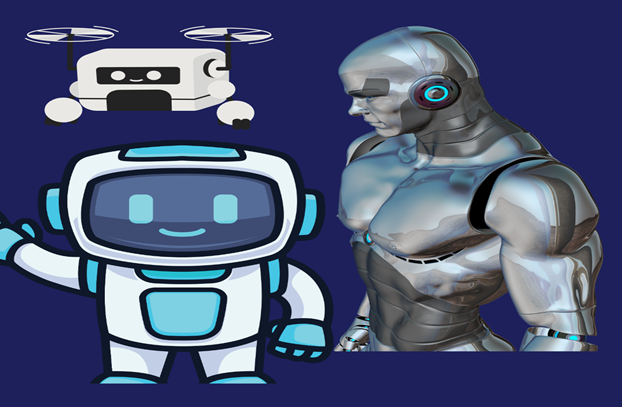
- Smarter Robots: Robots are becoming more human-like and used in industries and homes.
- Voice Assistants: Alexa, Siri, and Google Assistant are smarter than ever.
- AI in Entertainment: Movies, games, and even virtual influencers are being created using AI.
- AI in Cybersecurity: Protecting against hackers and online fraud with advanced AI tools.
These trends show how AI is spreading across all parts of life.
The Future Beyond 2025
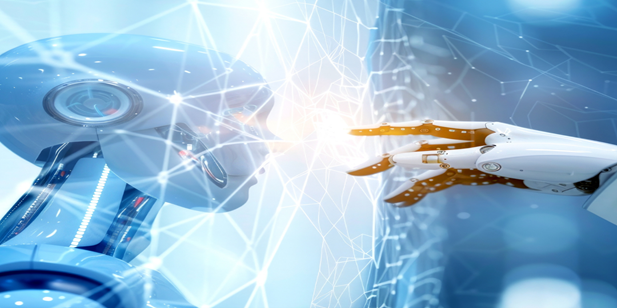
The rise of AI in 2025 is only the beginning. Experts believe the future will bring:
- More self-driving cars on the roads.
- AI-powered doctors assisting in surgeries.
- AI teachers guiding students in classrooms.
- Virtual AI companions in homes.
- Smarter factories with AI robots.
The possibilities are endless. But to make this future safe, governments, companies, and people must work together. Rules must be made to use AI fairly, and students must learn new skills to prepare for an AI-driven world.
Case Studies of AI in Action
Case 1: Healthcare in 2025
A hospital in Bengaluru recently used AI to detect cancer in its early stage by reading X-ray images. The machine spotted what even expert doctors missed, saving the patient’s life.
Case 2: Education in Remote Areas
In Bihar, students from villages are using AI apps to prepare for competitive exams. These apps give them practice tests, explain mistakes, and guide them step by step—just like a personal tutor.
Case 3: Farming with AI
In Punjab, farmers are using drones powered by AI to monitor crops. These drones take pictures from above and show which parts of the field need water or fertilizer. The result is higher yield and less waste.
These real-life examples prove that AI is not just theory—it is working in practice and making a difference every day.
Preparing for the Future: Skills and Jobs of Tomorrow
As AI grows, some jobs will disappear, but new jobs will also be born. The world of 2030 will need more data scientists, AI trainers, cybersecurity experts, and digital artists. Students must learn skills like coding, problem-solving, and creative thinking.
At the same time, soft skills like empathy, leadership, and ethics will become more important. Machines can calculate, but they cannot feel. Humans must focus on what makes us unique.
Governments should create programs to train workers who lose jobs because of AI. Companies should invest in reskilling their employees. Families should encourage children to learn digital skills along with traditional subjects. This is how we prepare for a future where humans and machines work together.
The Human Side of AI in 2025
At the heart of all this progress lies one simple fact: AI is meant to serve humans, not replace them. In 2025, we can already see how AI has become a helping hand. It reminds us of our appointments, suggests healthy diets, entertains us with music, and helps us learn faster.
But it also reminds us of something deeper—that technology alone cannot shape the future. Human choices, values, and wisdom must guide AI. The rise of AI in 2025 is not just about machines becoming smarter. It is about humans becoming wiser in how we use them.
Frequently Asked Questions
Q1. What is AI in 2025 used for?
AI in 2025 is used in healthcare, education, business, farming, banking, and even entertainment.
Q2. Will AI take away jobs?
Yes, some jobs may be replaced. But AI also creates new opportunities in technology, design, and creativity.
Q3. Is AI safe?
AI is safe when used responsibly. But it needs rules to protect privacy and prevent misuse.
Q4. Can AI think like humans?
AI can solve problems and make decisions, but it does not have emotions or feelings like humans.
Q5. Should students learn about AI?
Yes. AI is the future, and students who understand it will have better career opportunities.
Conclusion
The journey of AI in 2025 is like the beginning of a new chapter in human history. From hospitals to classrooms, from small shops to giant factories, from villages to global cities—AI is spreading everywhere. It saves time, reduces mistakes, and creates opportunities. At the same time, it brings challenges like job loss, bias, and privacy risks.
The solution is not to fear AI but to guide it. Just as fire can cook food or cause harm depending on how we use it, AI too must be controlled with wisdom. Governments, companies, and people must work together to ensure it is fair, safe, and accessible to all.
The rise of AI in 2025 is not an end—it is a beginning. It is the beginning of a world where humans and machines can walk side by side, not as rivals, but as partners in building a better future.
Also Read: https://techno.spherevista.com/?p=554